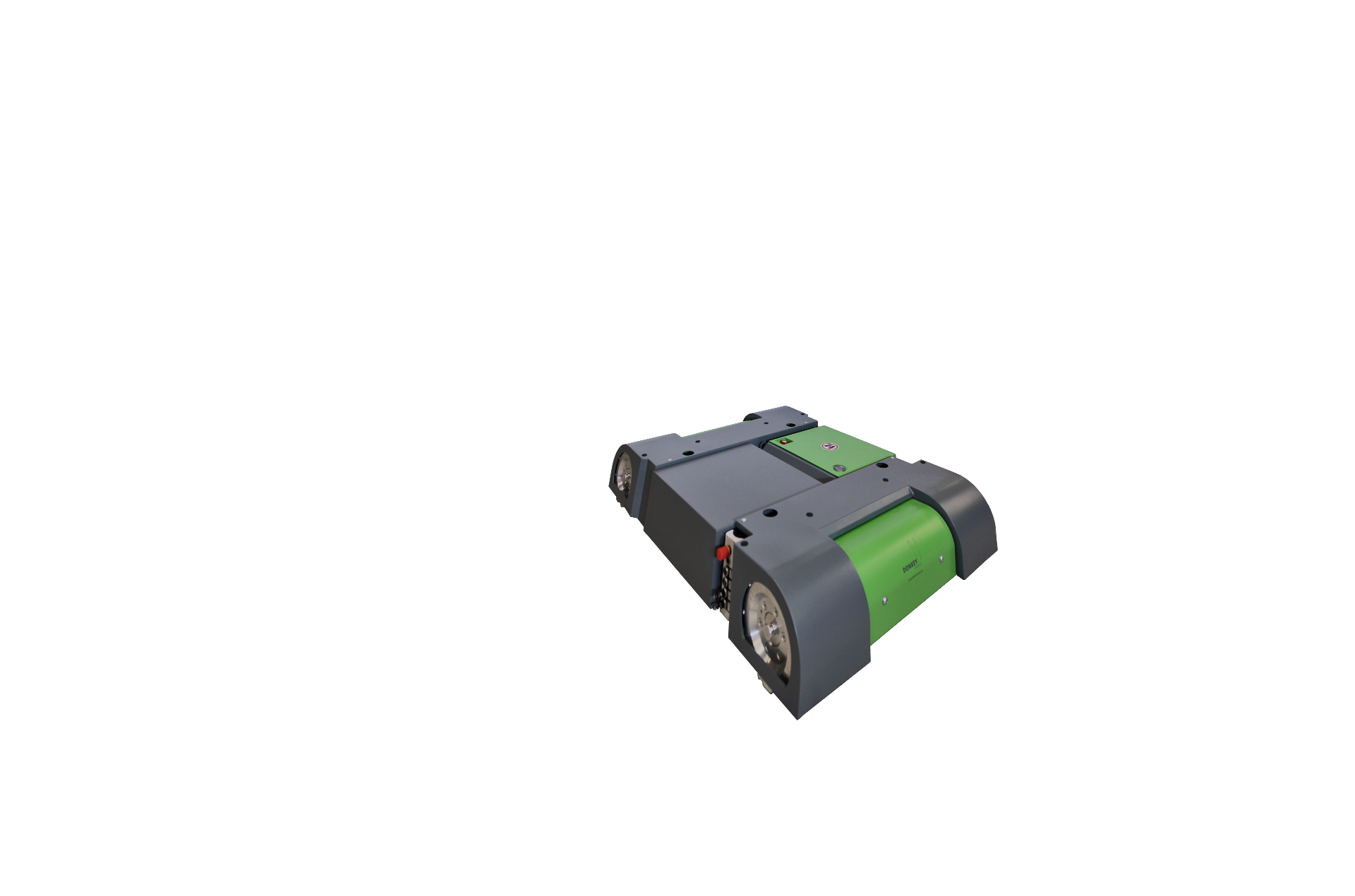
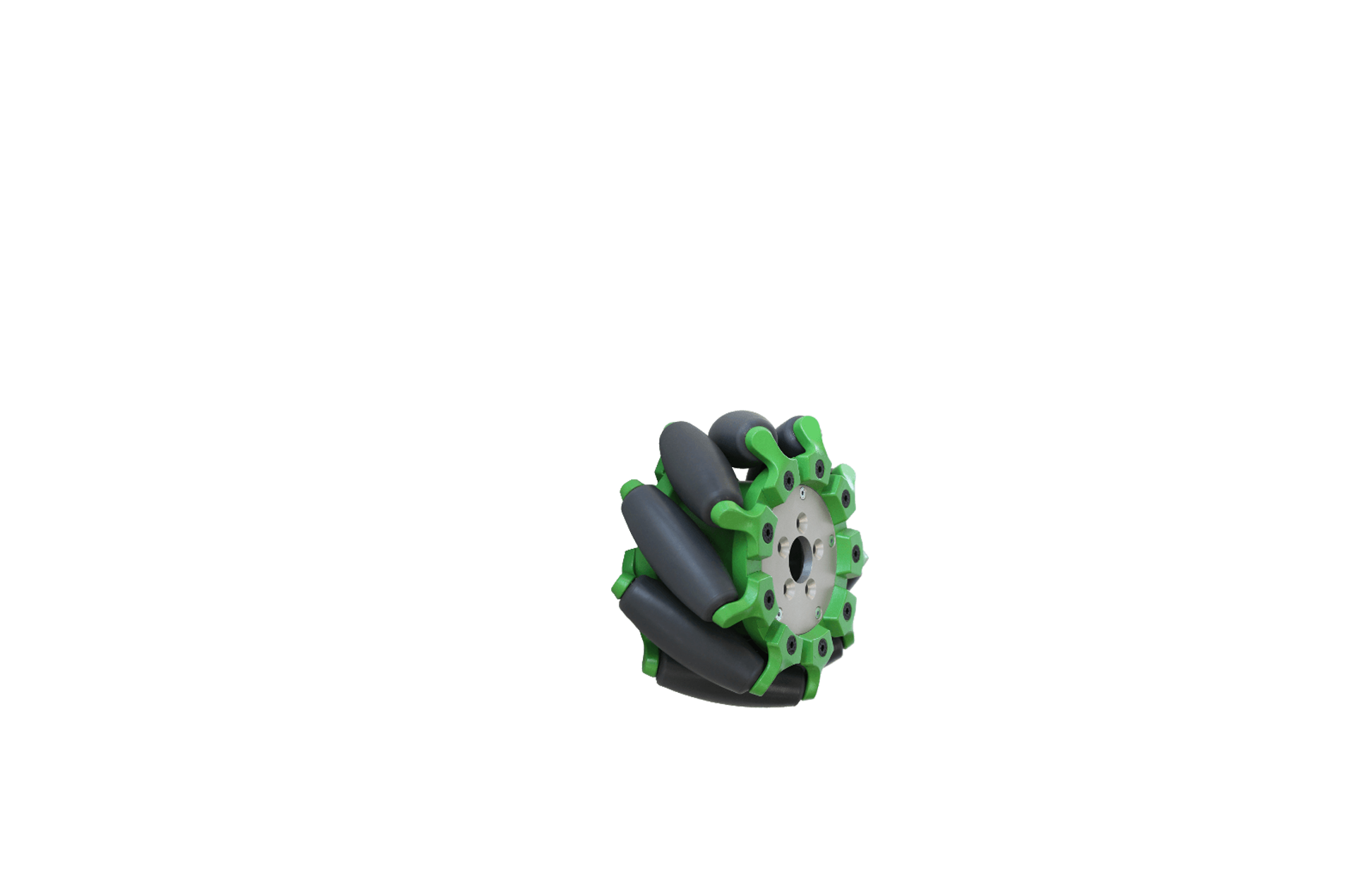
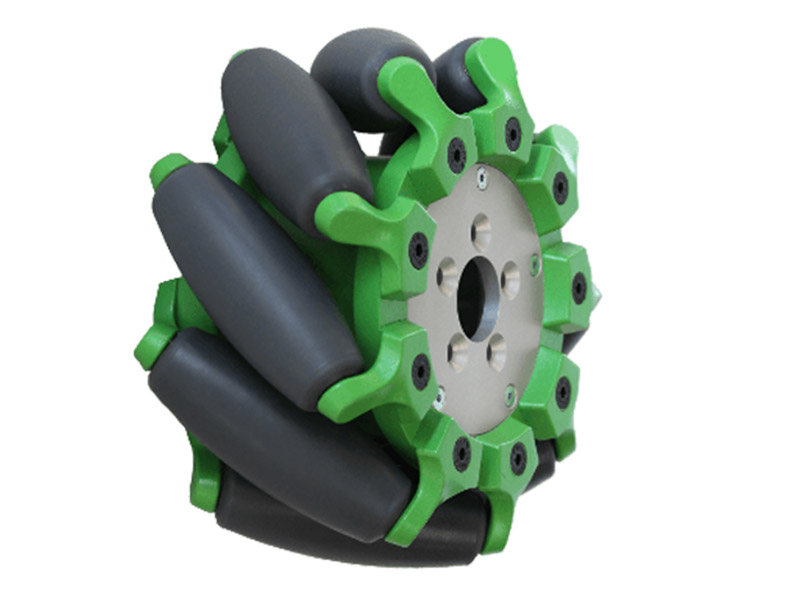
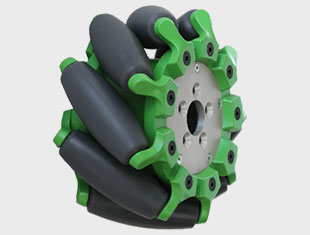
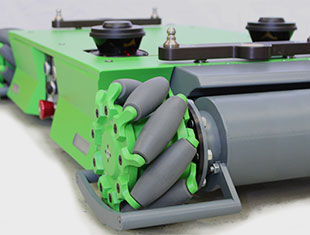
When a Mecanum wheel rotates, it generates two force components: one in the direction of the wheel’s rotation and a second perpendicular to it. Because the rollers can rotate freely, a Mecanum wheel does not behave like a conventional wheel that tracks straight. When additional forces are applied, its motion can be redirected—allowing movement in virtually any direction.
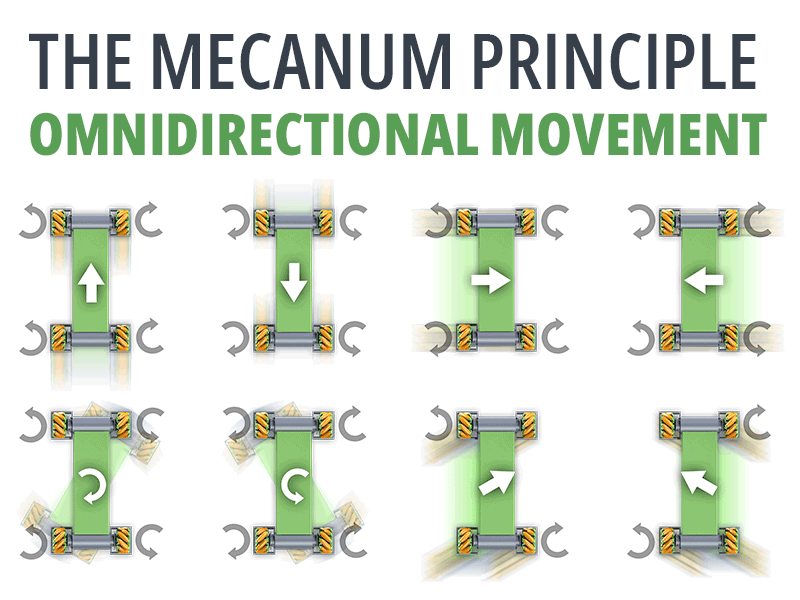
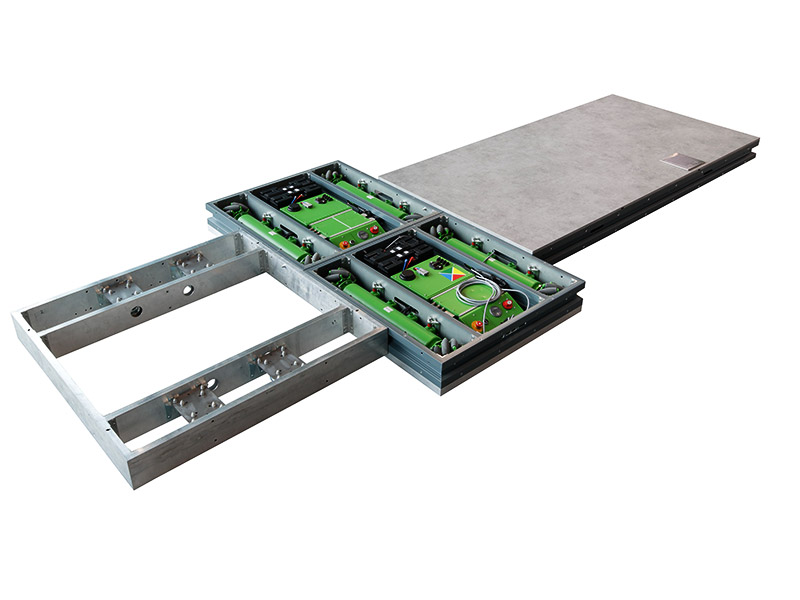
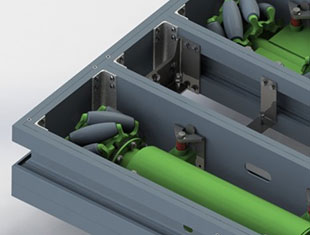
In a vehicle with four Mecanum wheels, the rollers are typically mounted at 45°, with the roller orientation alternating from wheel to wheel (offset by 90° between adjacent wheels). If each wheel were driven on its own, it would move diagonally toward a different corner of an imaginary rectangle. By combining the forces from all four wheels, the vehicle can move forward, sideways, diagonally, or rotate on the spot.
A helpful analogy is a nut on a threaded rod: if the nut is prevented from rotating, it travels along the thread’s axis. If it is allowed to rotate freely, it simply spins in place. Similarly, by controlling how the wheel forces combine, a Mecanum vehicle can translate or rotate as required.
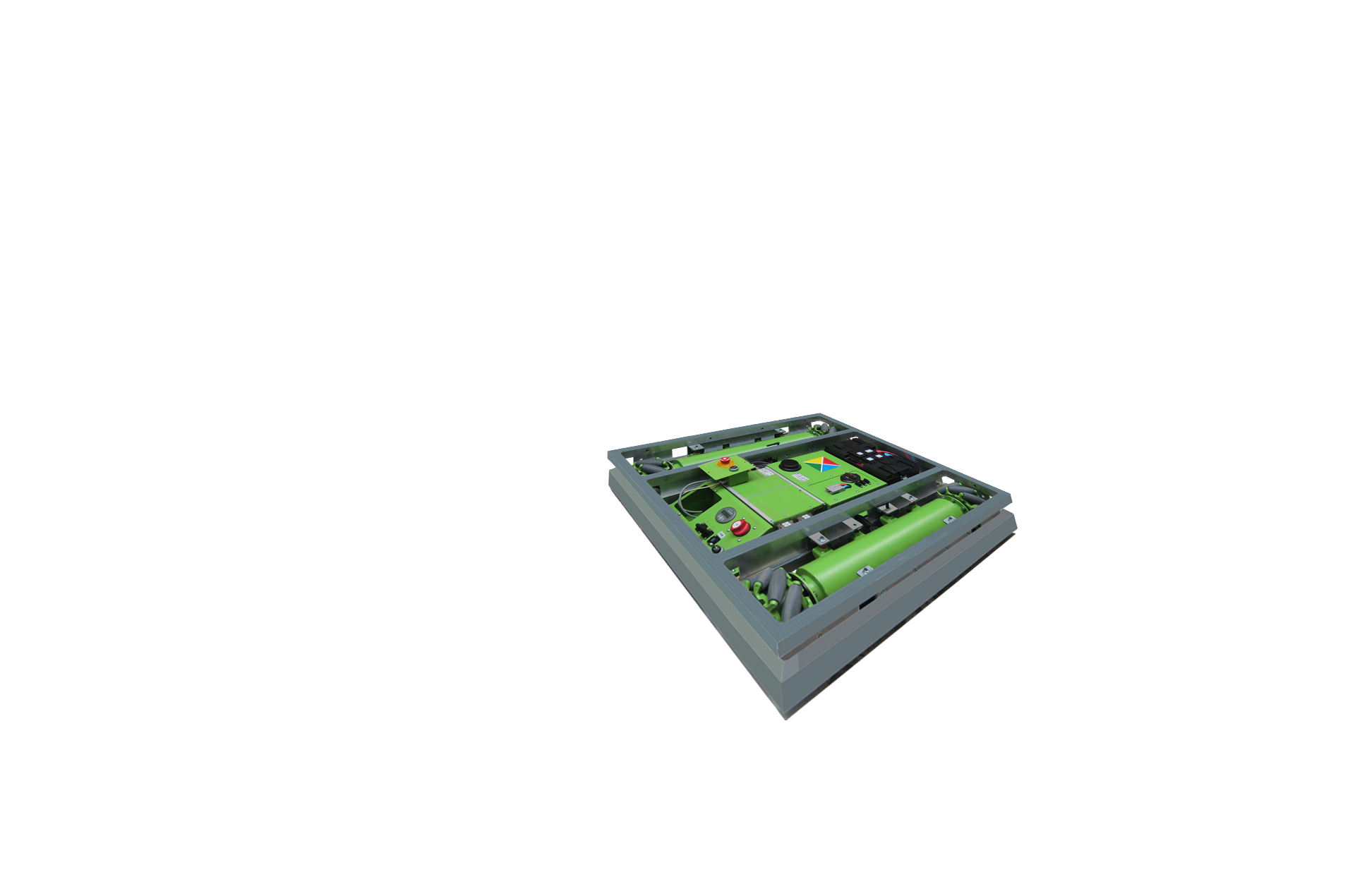
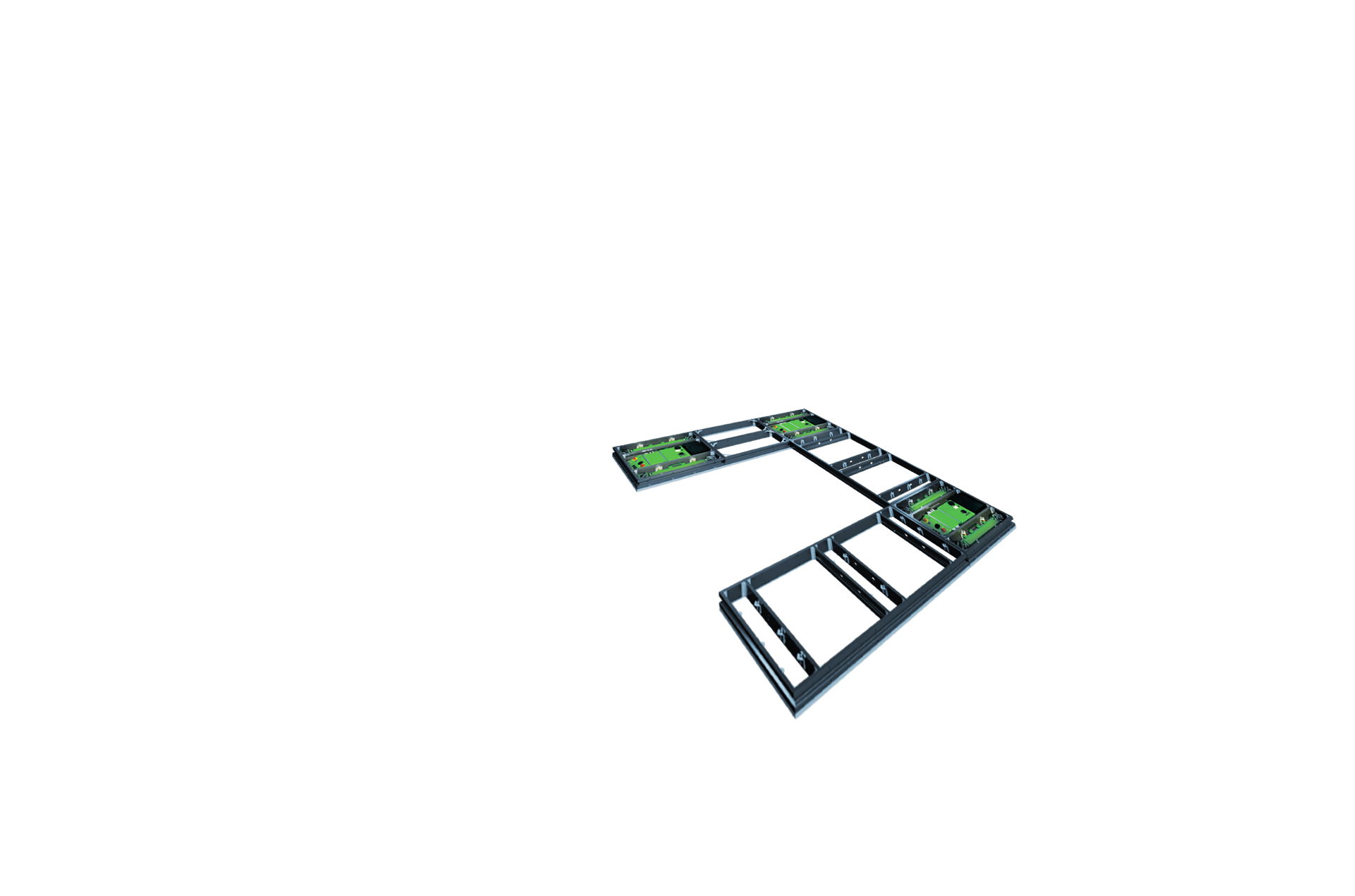
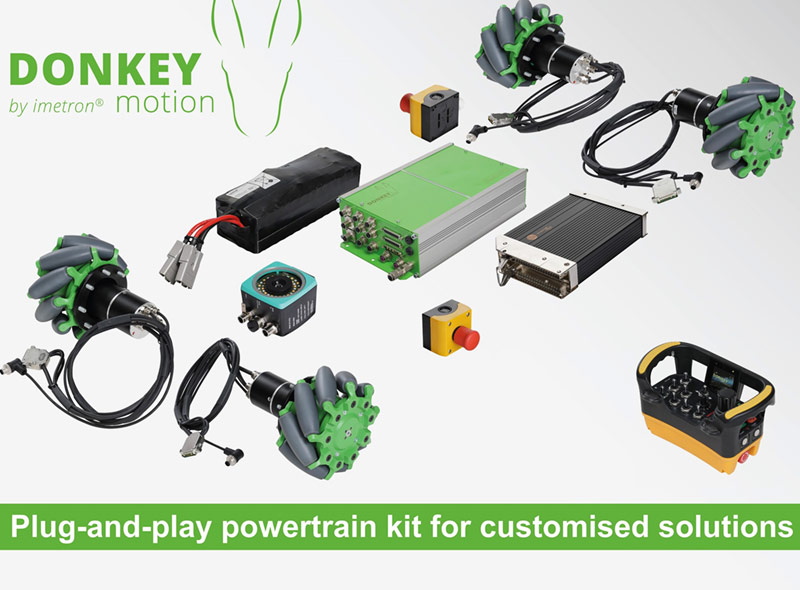
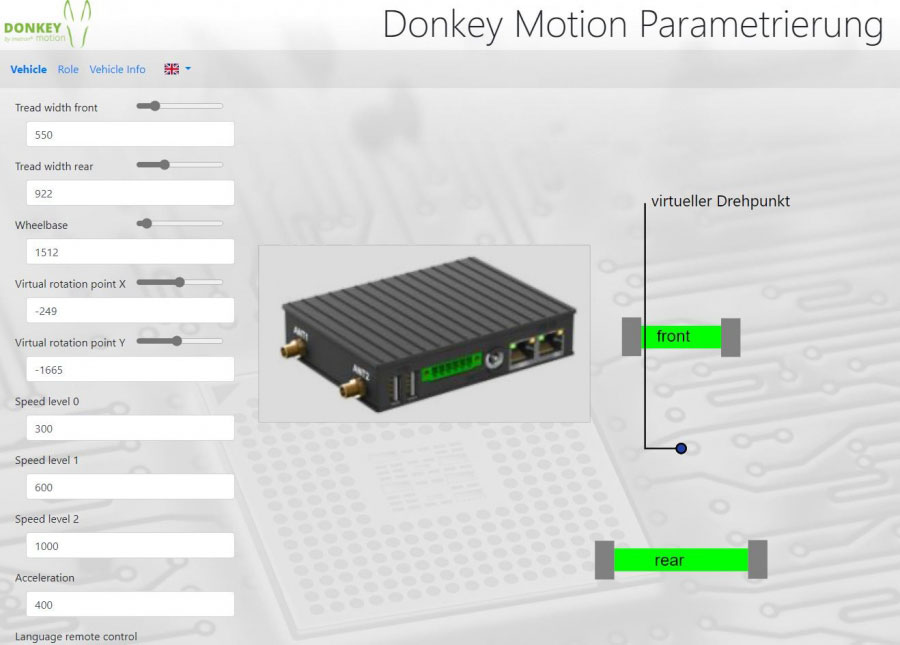
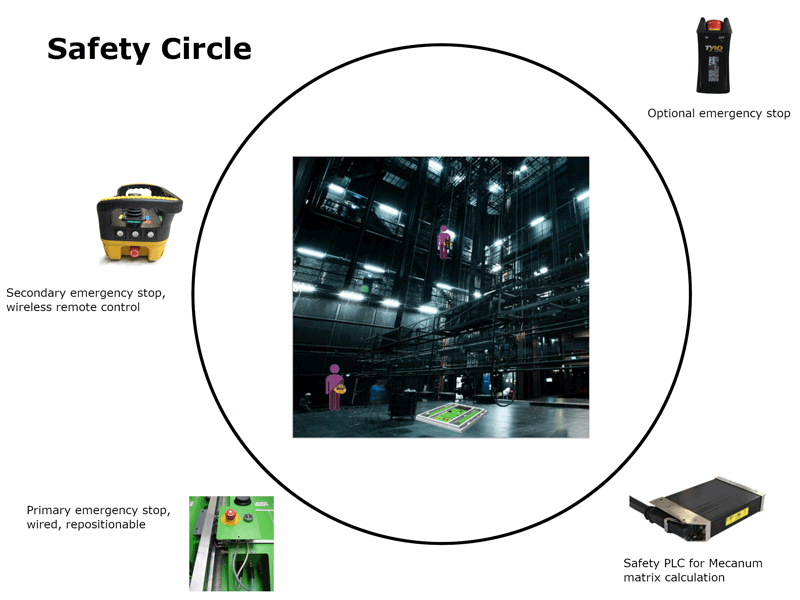
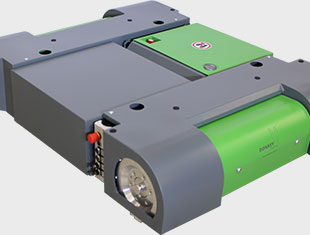
The direction and magnitude of each wheel’s driving force depend on its rotational speed and direction. By precisely coordinating the speed and direction of all wheels, the vehicle moves in the desired direction. DonkeyMotion vehicles, for example, can be controlled intuitively with a joystick. A safety PLC onboard coordinates the individual wheels to follow the commanded direction and speed.