Mecanum Principle

we move event technology

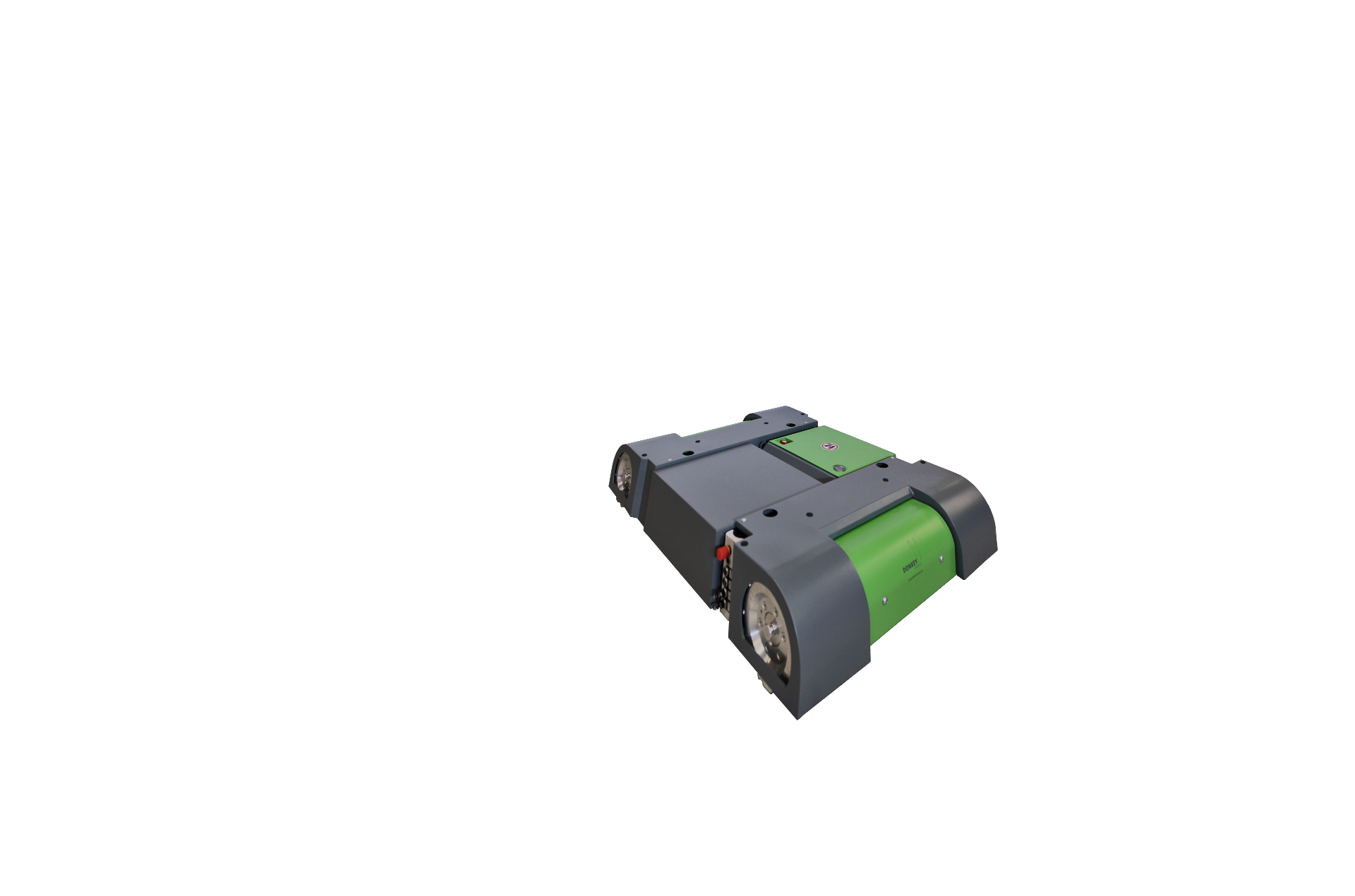
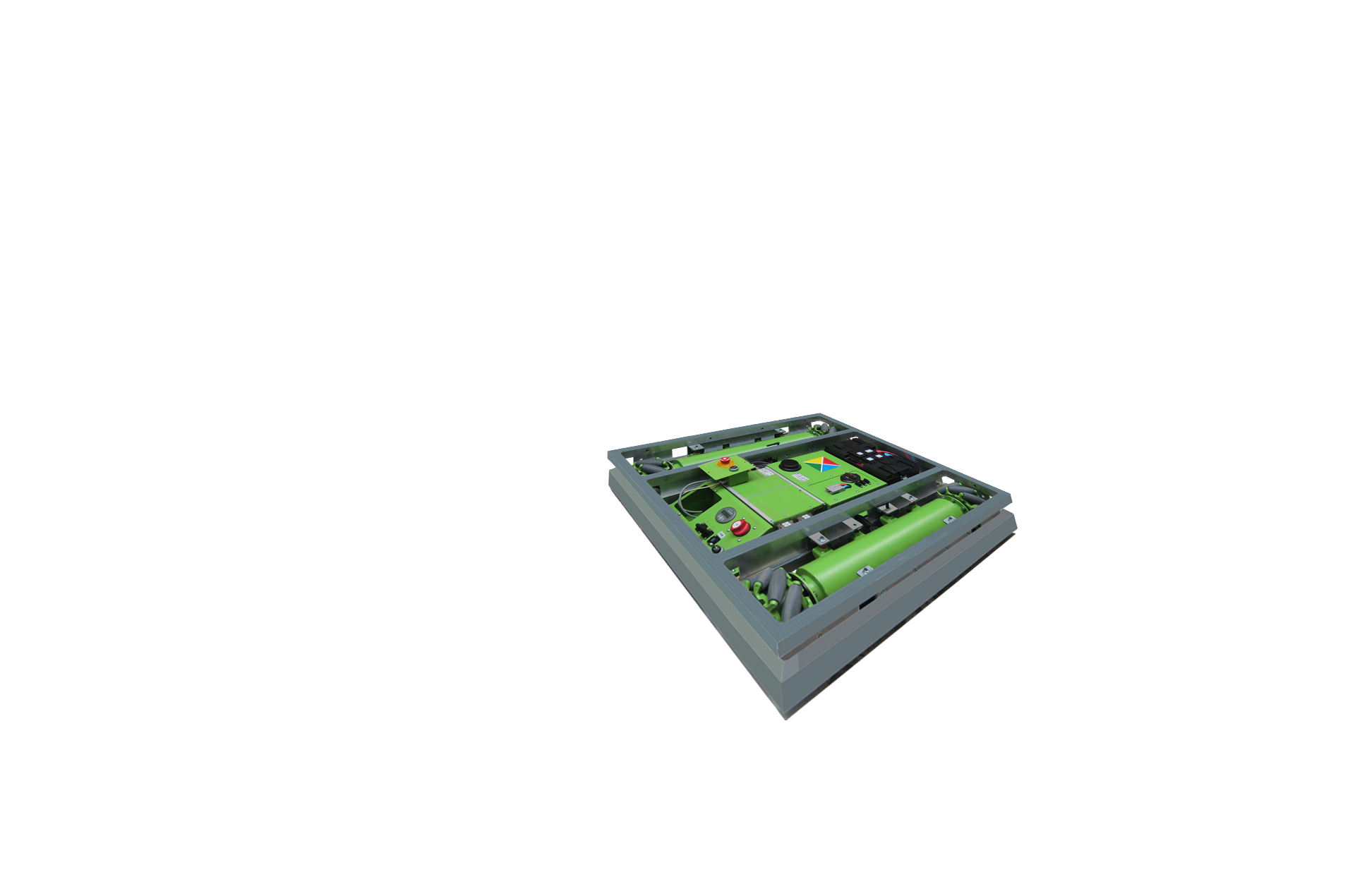
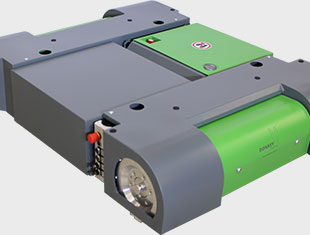
Movement of stage sets, camera tripods, mobile furniture, and entire stage segments creates magical effects through compact, concealed drive systems. The components of the modular system provide all essential functional units: drive modules, controllers, batteries, safety sensors, and more.

Inspired by LEGO: unpack the components, screw them on, plug in the cable sets, configure the controller – done!


MOVEMENT LIKE ON AIR CUSHIONS WITH FULL TRACTION

The History of the Mecanum Wheel

The Mecanum wheel was invented in 1973 by Bengt Ilon, an engineer at the Swedish company Mecanum AB. The wheel is sometimes referred to as the Ilon wheel in his honor. The U.S. Navy purchased the patent from Mecanum and initially used the technology exclusively for loading and unloading cargo on their ships. It wasn’t until 1997 that the technology became available for commercial and civilian applications.

To this day, most Mecanum vehicles—similar to those used by the Navy—are employed to transport extremely heavy loads in confined spaces. In the aviation industry, for example, large multi-wheeled Mecanum transporters are used to maneuver massive fuselages through production halls. Smaller Mecanum vehicles, however, remain relatively rare.

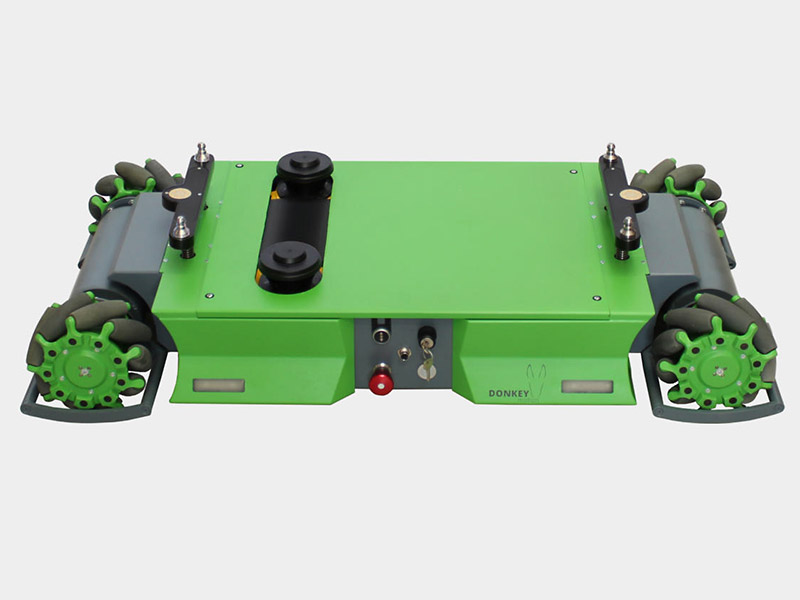
In Europe, imetron with its DONKEYmotion brand is among the leading suppliers of Mecanum-based vehicles and has specialized in these smaller-scale systems. The omnidirectional DONKEYmotion transport systems are suitable for virtually all industrial applications. Their unique maneuverability opens up entirely new possibilities for Automated Guided Vehicles (AGVs) in intralogistics as well as for applications such as stage technology.

With Mecanum technology, transport and logistics are set to undergo a fundamental transformation in the coming years.


TONS OF OMNIDIRECTIONAL MOBILITY

Vehicles with Mecanum wheels can move completely freely in two dimensions – much like hovercraft – while maintaining full contact with the ground. Whether starting from a standstill or while in motion, they can move in any direction, turn along curves of any radius, or even rotate on the spot. The foundation of this omnidirectional mobility lies in the unique design of the Mecanum wheel.

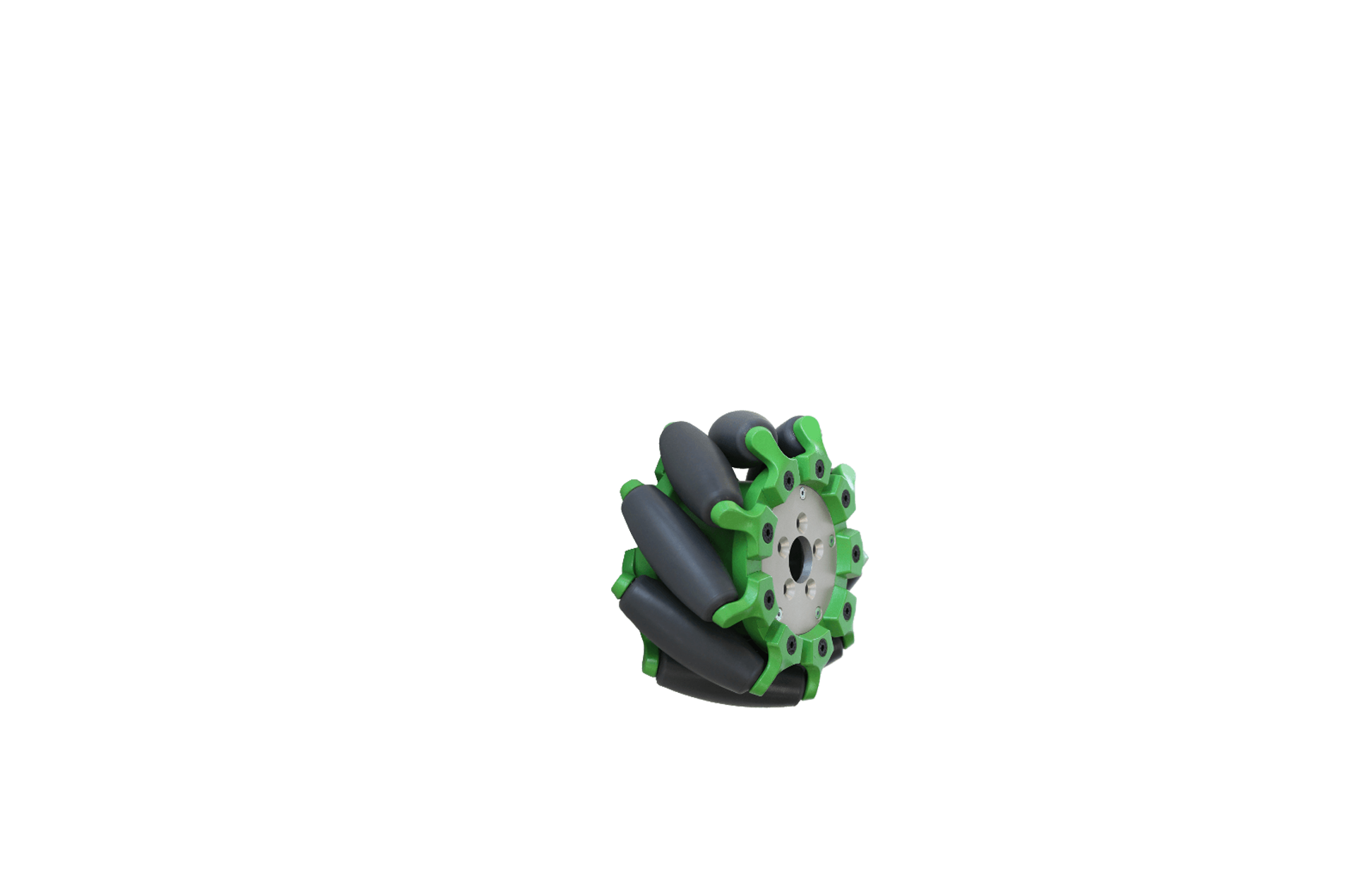
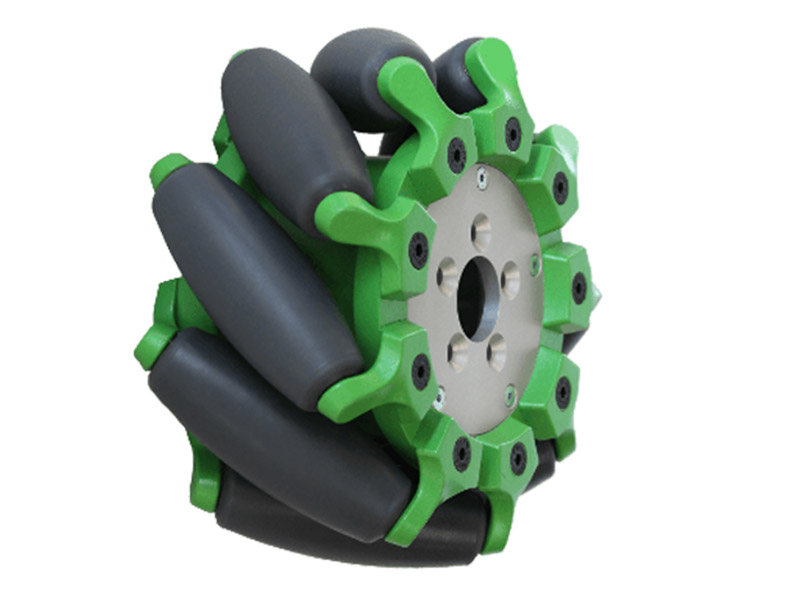
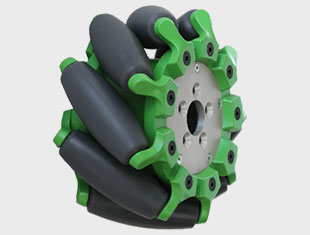
Unlike conventional wheels, the Mecanum wheel does not have a continuous tread surface. Instead, its rim is fitted with freely rotating, barrel-shaped rollers, typically positioned at a 45-degree angle to the wheel’s axis. These rollers can spin around their own inclined axes. Their shape, size, and spacing are designed so that the wheel effectively forms a continuous rolling surface.


Power Transmission and Control

When a Mecanum wheel rotates, two force components are generated: one in the direction of the wheel’s rotation and another at a right angle to it. Because the rollers are movable, the Mecanum wheel does not track straight like a conventional wheel. When additional forces are applied, its movement can be redirected in any desired direction.

In vehicles equipped with four Mecanum wheels, the 45-degree roller axes are offset by 90 degrees from each other. Each wheel, on its own, would move diagonally toward a different corner of an imaginary rectangle. You can imagine the system like a nut on a threaded rod: if the nut is prevented from turning, it moves linearly along the thread; if released, it stays in place and spins around the axis.

The direction and magnitude of the drive force of each Mecanum wheel depend on its rotational speed. By precisely combining the direction and speed of each wheel’s rotation, the vehicle moves in the desired direction. DONKEYmotion vehicles can, for instance, be controlled easily via joystick. A small onboard computer synchronizes the movement of each wheel to reach the target position with the desired speed.


How It Works

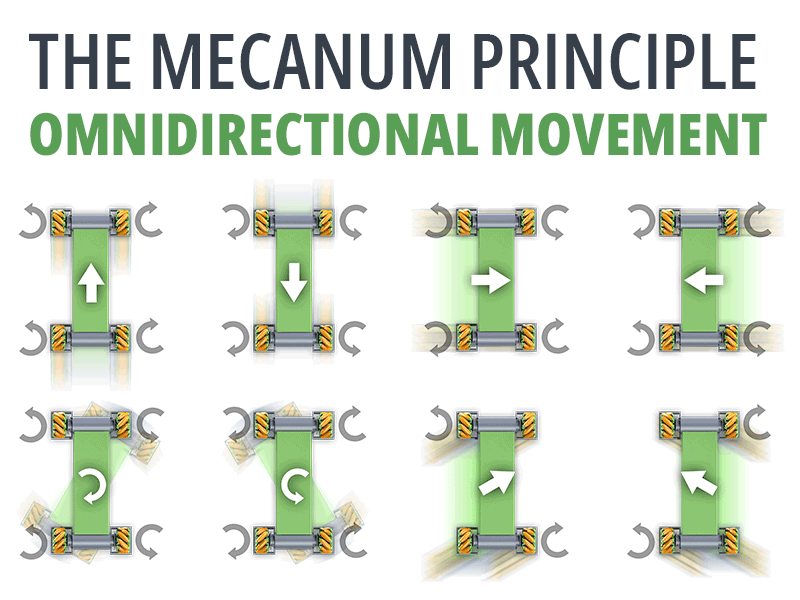
To move the vehicle straight ahead, the force vectors of the front wheels must act forward and inward, and those of the rear wheels forward and outward – all with equal force (i.e., speed). In this case, all wheels rotate forward at the same speed, just like in a conventional vehicle.

If the front-left and rear-right wheels rotate forward while the other two rotate backward, all at equal speed, the vehicle moves sideways to the right. For turning, all wheels rotate in the same direction like on a tracked vehicle, with the outer wheels turning faster than the inner ones. The greater the difference, the tighter the turn.


Ideal for Show Effects and Stage Design

Because Mecanum systems can rotate in place, additional rotating tables for tool-change carts or mobile assembly platforms become unnecessary. In theater and entertainment applications, a Mecanum vehicle can serve simultaneously as a moving stage platform and a turntable.

This not only saves space but also time – consider the complexity of parking maneuvers. Instead of carefully steering through tight curves, moving back and forth until reaching the correct position, a Mecanum vehicle simply drives next to the gap and moves directly sideways into it – with millimeter precision.


The Mecanum wheel’s simple point-to-point control provides unbeatable advantages: components, parts, and production equipment can be transported with maximum flexibility, without costly infrastructure changes. The possibilities for automating logistics processes are virtually limitless.

Dynamic Stage Elements for Modern Productions

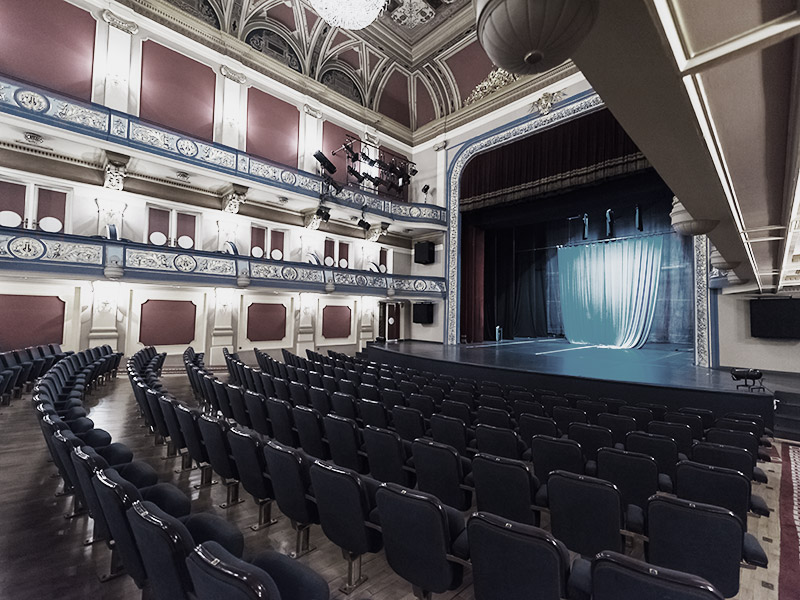
Dynamic stage elements are now an essential part of today's television shows. Our mobile drive systems enable magical, unprecedented stage effects for theatre productions, musicals, TV shows and theme parks..

Have you ever seen a rotating sofa on TV? Rotating seating elements are already popular in stage design – but the future of stage technology requires more than simple rotation or linear motion on rails.

Mecanum wheels make entirely new effects and movements possible. The possibilities for stage design are endless: freely moving set pieces in all directions create breathtaking effects that amaze audiences. Imagine combining the freedom of a hovercraft with the precision and safety of a CNC machine to give directors full creative control and peace of mind

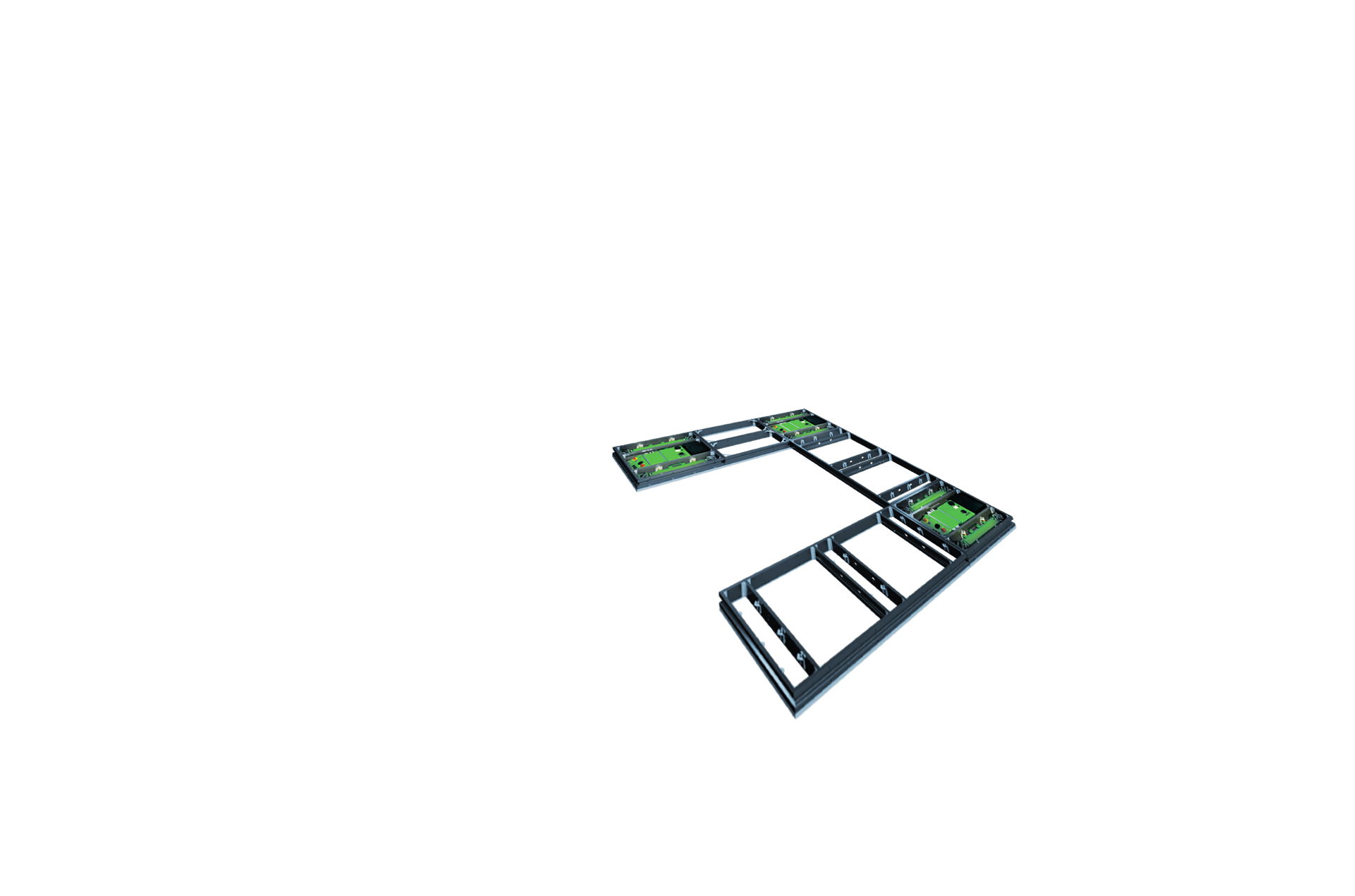
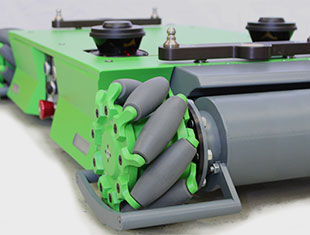
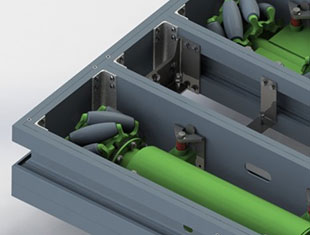
The modular system enables the rapid construction of custom stage setups. MecanumDrives can be easily attached to standard stage structures, either by being bolted directly to wooden frames or by being mounted to aluminium trusses. The drives can be positioned freely and seamlessly integrated into the stage design. Typically, four wheels are used per platform, but larger constructions can use six or eight.

Stage equipment rental companies appreciate the compact, robust design of our components and the plug-and-play commissioning of our drive systems.